
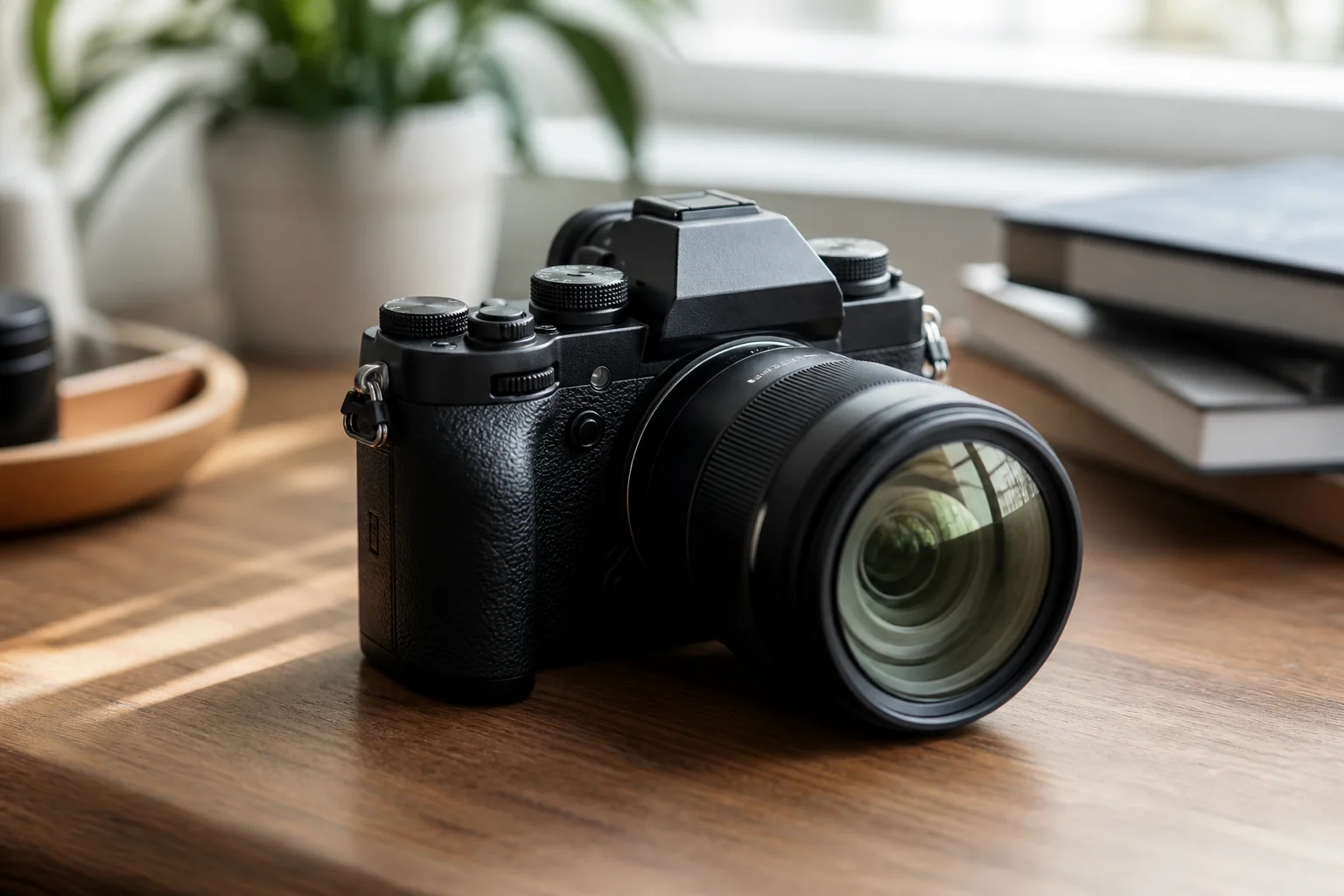
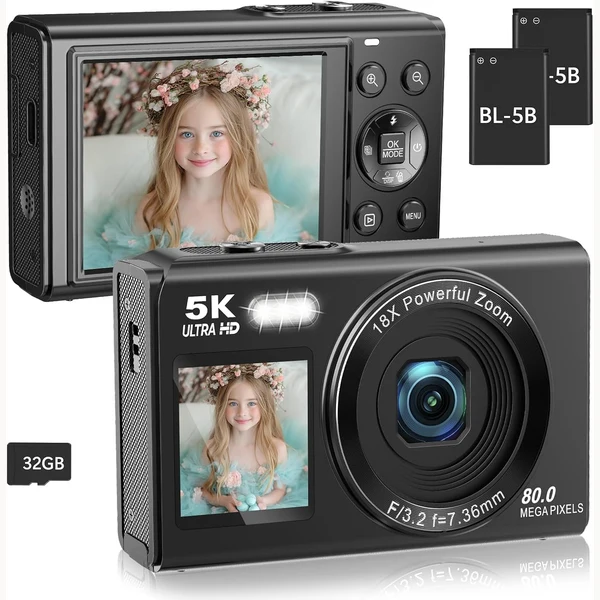
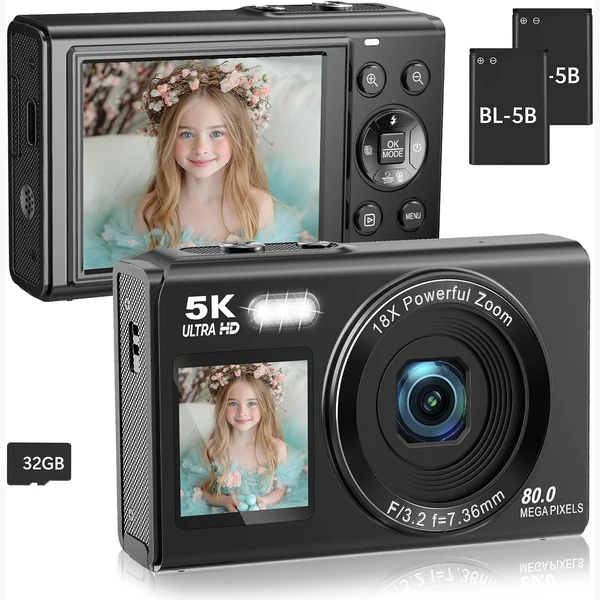
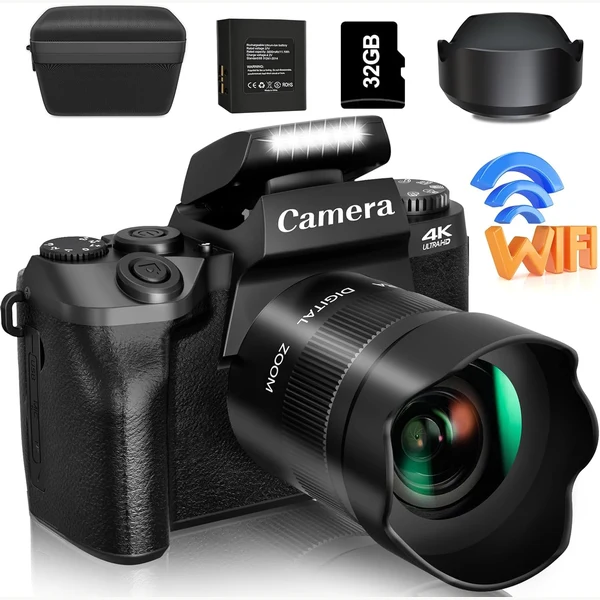
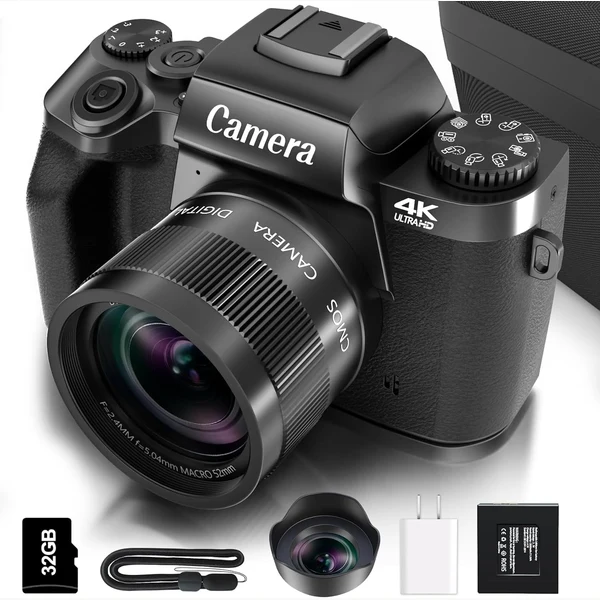
The 5K label on Saneen Digital Camera listings refers to maximum still photo resolution — typically around 50 megapixels — not 5K video. Most 5K-branded bodies still record 4K Ultra HD video at 3840×2160, matching the entry tier. You are paying for extra headroom in photography: tighter crops, larger prints, and slightly more detail in landscape and product shots. This guide explains what 50MP means in practice, how 5K models differ from 4K and 8K siblings, and who benefits from the middle tier.
Video-focused buyers should still read our 4K guide. Flagship shoppers comparing 64MP and 8K video badges should visit 8K models. Setup and menu navigation are covered in the user manual.
Understanding 50MP
50 megapixels means roughly 50 million pixels per still image. On Saneen compacts, that translates to very large JPEG files suitable for cropping a wide vacation shot into a tight portrait without visible softness. Sensor size remains compact — this is not medium-format territory — but the pixel count gives beginners forgiving room to fix composition in post.
Marketing sometimes says 5K photos when referring to pixel dimensions near 5000 pixels on the long edge. The exact output varies by aspect ratio and firmware. What matters operationally: 5K-tier Saneen cameras produce noticeably larger files than 44MP 4K-tier units. Plan storage accordingly on the included 32GB card or upgrade early.
5K stills, 4K video
Do not expect 5K video files from standard Saneen 5K boxes. Video modes remain 4K at 30 fps on most listings, with 1080p at 60 fps as a smoother alternative. The 8K tier adds higher video resolution badges on select models — see our 8K comparison before assuming video upgrades with 5K stills.
Hybrid shooters benefit most: record 4K B-roll at the birthday party, then grab 50MP stills of the cake cutting without switching devices. Flip-screen framing works identically across tiers. Wi-Fi transfer handles large JPEGs; expect longer phone uploads than from 12MP smartphone cameras.
Versus 4K tier
4K-tier Saneen cameras advertise 44MP stills and 4K video at the lowest price. Image quality in good light is similar at web and social sizes. Differences emerge when you crop aggressively or print beyond 8×10 inches. The 5K tier may also ship with marginally improved lens coatings on some batches — not a revolution, but subtle edge sharpness in corner crops.
If you never crop and only share online, save money on the 4K tier. If you frame loosely and fix later, or print family portraits, the 5K step-up often costs only a small premium online — worthwhile for photo-heavy users.
Versus 8K tier
8K-tier listings push 64MP stills and may advertise 8K video modes on the box. Real-world gains over 50MP are narrower than marketing suggests for casual users. Professional pixel peepers and tech enthusiasts gravitate to 8K badges; everyone else may find 5K sufficient. Video creators who need 8K for editing flexibility should read the dedicated 8K page rather than assuming 5K bodies upgrade video.
Battery life and heat can differ slightly — higher resolution processing draws more power during burst shooting. Carry a spare USB power bank for long event days regardless of tier.
Dual lens options
Several 5K dual-lens Saneen models combine front and rear cameras in one body. Switch lenses for selfies versus scenery without swapping hardware. Both lenses may not match exactly in color science — minor white balance tweaks in editing help. Kids and travel families love the convenience; purists prefer a single quality lens.
Dual-lens units appear on Walmart shelves more often than specialist photo retailers. Check listing photos for two visible lens openings on the front plate. Our manufacturer guide explains why feature sets vary between marketplace batches.
Flip screen benefits
The 180° flip screen carries over fully to 5K models. Compose 50MP group photos while standing in the frame. Monitor exposure on your face during 4K selfie video. Fold the screen inward to protect it in a backpack. Touch autofocus on supported units targets eyes reliably at arm's length — a feature smartphone users already understand.
Higher megapixel counts reveal focus mistakes more clearly. Use tap-to-focus and give the shutter a half-press to confirm lock before capturing stills. The same discipline improves video sharpness when you pull still frames from 4K clips later.
Bundle and accessories
Typical 5K bundles include the camera, rechargeable battery, USB charging cable, wrist strap, soft pouch, 32GB SD card, and mini HDMI cable. Enough to shoot immediately. Missing items serious photographers want: spare battery, faster UHS-I card, tabletop tripod. The manual guide lists safe charging practices and first-boot formatting steps.
Accessory kits sold separately under the Saneen brand add wide-angle adapters and macro lenses. Optical quality is fun for experiments, not pro-grade. Manage expectations and enjoy the learning process.
Who should choose 5K
Photo-first families who print albums and crop group shots. Aspiring content creators needing 50MP thumbnails from the same body that records 4K. Students learning composition with forgiving resolution. Gift buyers wanting a step above entry 4K without flagship 8K pricing.
Skip 5K if you only shoot video and never print — the 4K tier saves money with identical video specs. Jump to 8K only when you specifically want 64MP stills or 8K video marketing on the box.
Making your pick
Read the major online marketplaces title for 50MP and 5K photo wording alongside 4K video. Confirm bundle contents match photos. Check owner reviews for firmware and app notes on your chosen batch. Format the SD card in-camera before a wedding or vacation — large 50MP files fill storage faster than you expect.
The 5K tier is Saneen's balanced recommendation for most buyers: strong stills, proven 4K video, flip screen, Wi-Fi, HDMI, and beginner-friendly menus in one affordable package.